Webinar alert!

Win a bottle of Marquis de Montesquiou Reserve Armagnac for Father’s Day! Sign up to and join the Marquis webinar on Facebook live Wednesday, June 16 at 7pm for your chance to win. Sign up is free and you will receive a link to a 25% off promotion on the Marquis Armagnac range. The winner … Continue reading Webinar alert!

Focus on the Languedoc

Flexibility. Market-sensitivity. Reliability. Those are the three distinguishing qualities that the wine producers of Languedoc-Roussillon have sought to bring to international wine markets since the 1980s. These are not – it almost goes without saying – qualities that have always been associated with the French wine business. And that’s why – along with its embrace … Continue reading Focus on the Languedoc

Adapt and survive

Like hundreds of independent merchants, Tivoli Wines in Cheltenham experienced a tidal wave of orders in the early weeks of lockdown. But where were these orders coming from? Who were these new customers, and were they different from the regulars that the team was used to meeting and greeting? Could they be persuaded the stick … Continue reading Adapt and survive

Our entry-level wines aren’t cheap options for most drinkers

Right, let’s see who’s been paying attention. What’s the average selling price of a bottle of still wine in the specialist independent trade? If your answer is £13.71, you’ve either made a very educated guess, or possibly you’re looking at page 27 of our March edition, where we reported that exact number as part of … Continue reading Our entry-level wines aren’t cheap options for most drinkers

Why Covid-19 could go ballistic at wine tastings

Event organisers are hopeful that at least some tastings will take place as normal this autumn. But these ritual trade gatherings have the potential to become superspreader events for coronavirus. Report by Graham Holter   If you could somehow be parachuted into a London trade tasting tomorrow – taking public transport out of the equation … Continue reading Why Covid-19 could go ballistic at wine tastings

Webinar alert!

Win a bottle of Marquis de Montesquiou Reserve Armagnac for Father’s Day!

Sign up to and join the Marquis webinar on Facebook live Wednesday, June 16 at 7pm for your chance to win. Sign up is free and you will receive a link to a 25% off promotion on the Marquis Armagnac range.

The winner will be announced at the end of the webinar and alerted by email.

The webinar is hosted by Eric Durand (cellar master), Dave Marsland (brand ambassador) and Gethin Jones (bar manager of Cultureplex, Manchester).

Let’s get spirits booming in indies

The risks and rewards of reopening my shop

Cat Brandwood of Toscanaccio in Winchester would be happier to stick with deliveries for a while longer to minimise the risk of spreading infection. But she suspects she’ll be opening her doors on June 15 and aiming for some sort of normality

When lockdown was announced on March 23 I had already decided that I was going to close my doors to customers and operate a delivery service only for the time being. My other staff had clearly been uncomfortable working during their last shifts and I was increasingly concerned about bringing home the virus.

Here we are 11 weeks later; I’ve spent the equivalent of a week’s working hours driving around in a souped-up Fiat 500 that is wholly unsuited to being a delivery vehicle, I’ve developed a habit of talking to myself in my empty shop and yet I’m still not keen on the idea of throwing open the doors again and regaining my sanity.

As someone who, it turns out, really thrives on human interaction, why am I not keen to bring back the soul of my shop – interaction with my customers?

Cat Brandwood

The advice we’ve been given essentially amounts to the following: Do a risk assessment, practise social distancing, everyone wash their hands, clean more frequently. This is exactly what was being practised in the shop pre-lockdown and it wasn’t good enough then. I don’t feel reassured that I’ll be doing the right thing by throwing open the doors on June 15, but I suspect that for the business to thrive I must.

As a business with fewer than five employees I don’t have to have a written risk assessment, but it has been reported that there will be random spot checks by HSE so it seems that it would be prudent to have this written down. The public (customers/staff) have also been encouraged to report conditions that they think are unsafe.

How much responsibility do I have? Will I find myself under investigation if there is an outbreak that can be traced back to my store? That is certainly what would happen if the business was the source of a salmonella outbreak.

Salmonella isn’t very easy to catch from talking to your customers, though. The government has made it clear that there are options for enforcement including fines and jail sentences of up to two years for businesses not protecting staff and customers. Just how far should I be going in ensuring everyone is protected? One independent business on my street will be supplying disposable gloves and facemasks at the door and requiring that they be worn in store.

My risk assessment currently labels the risk of opening as very high. As the only full-time member of staff, there is a real risk to business continuity as my being ill would shut the place. Delivery to my customers has largely been successful, especially in those first few weeks of panic, and I’d be much happier if this were to continue. I also know that as other businesses open up around me – businesses that haven’t been as lucky as I am to maintain a revenue stream during this period – that I need to be open too.

Even when I open again, I fear that a little bit of soul has been lost that will take time to recover. Friday evenings were often spent with customers clutching a well-earned glass of wine whilst I talked them through some wines for their weekend. It was a bustling place that was full of life, jollity, and the odd secret spilled. But mostly it was full of people: something I probably won’t see again for a long time.

European wine producers ‘could give up on UK market’

The government is being urged to scrap plans to impose costly VI-1 import forms on all EU wines arriving in the UK from next year.

The Wine & Spirit Trade Association says European producers will face €300 to €400 of extra costs for every wine they export to the UK.

It argues that the forms have little meaning or relevance and are essentially “a barrier to trade”.

VI-1 forms represent “a huge burden” for producers and importers alike

The requirement to use VI-1 forms will hit independents disproportionately hard, especially as specialist merchants typically over-index in European wines.

Speaking at a webinar for independent merchants, organised in partnership with The Wine Merchant, WSTA policy director Simon Stannard described the VI-1 system as “quite burdensome”.

He explained: “An exporter is required to undertake a suite of tests that accompany that shipment. We think those tests will cost around €300 or €400 a go, and we think there would be upwards of about a quarter of a million movements of these documents for goods coming from the EU to the UK.

“So it’s a huge burden on the exporters, but of course that burden simply passes on to the importer and any costs pass on to the consumer.”

He added: “These are not particularly useful forms. I think any wine producer from outside the EU will argue that these are a technical barrier to trade.

“Knowing the three types of acidity in a wine, two types of alcoholic content, the sulphite level, and having a lab test to confirm those details is not particularly helpful. It doesn’t particularly help traceability, but it does cost, and it does add bureaucracy.

Specialist independents typically over-index in European wines

“We’re quite worried that with the introduction of these rules, many small producers in mainland Europe will simply no longer want to send their goods to the UK.

“For those independent merchants for whom part of their USP is to get interesting stock from small producers, there’s a genuine risk that the supply might run out because they simply won’t want to spend €400 and go through the necessary hoop-jumping.

“It’s a real issue and one that people should be genuinely concerned about.”

The Wine Merchant’s reader survey this year found that France, Italy and Spain are independents’ most important countries of origin.

The same survey found that just over 18% of wine in the independent trade is imported direct from producers, with 44% of respondents expecting that figure to increase in the coming year.

The WSTA is hoping to recruit more independent members as it ramps up efforts to fight the trade’s corner over issues such as import documentation, labelling and tariffs that will come into effect from January, at the end of the Brexit transition period.

Judging the Wine Merchant Top 100

Hugo
Hugo at Vineyards of Sherborne decides to call it a day

Judging is under way for this year’s Wine Merchant Top 100. But instead of taking place in a room in west London, it’s happening all over the country.

Covid-19 disrupted our plans for judging on April 1 and so we needed a new solution. We could either return all the wines to the companies that sent them in, and write off the 2020 competition altogether. Or: we could invite our judges to do the tasting in their own homes and premises.

So we’ve sent out the wines to 26 first-round judges, all bagged up so that they can be tasted blind, and in flights. The wines that they score highest will make it through to round two, where 10 more judges will re-taste them and we’ll arrive at our Top 100.

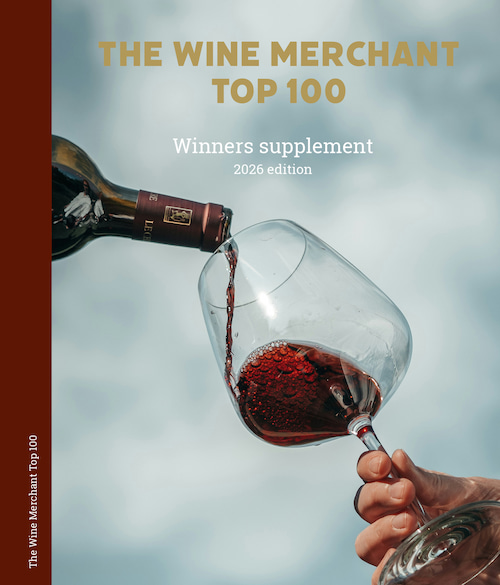
All of our winners will appear in a special supplement, as always, which we’ll mail to every specialist independent wine merchant in the land. We’re also creating a website which will showcase all our winners – and tell consumers where they can buy them. They’ll all be independent-trade exclusives.

Thanks so much to all of our judges this year. Tasting these wines takes a lot of time and effort and we know that most of you are already working crazy hours to cope with current demand.

Dan KirbyCorkr Fine Wines
Polly GibsonGrapeSmith
Sara BangertThe General Wine Company
Finn DunlopMacknade Fine Foods
Riaz SyedStonewines
Eugenio CiccarelliVinarius
Lucy ChenowethThe Old Garage
Deiniol ap DafyddBlas ar Cwd Cyf
Chris and Gosia BaileyMr & Mrs Fine Wine
Simon ParkinsonVinological
Anthony BorgesThe Wine Centre
Hannah WilkinsVineyards
Kasia KonysDunnell’s
Matt ThomasVinoramica
Jamie SmithTring Winery
Steve TattamWinyl
Sophie PoultneyGrace & James
Jon CampbellDeFINE Food & Wine
Jon MooreMumbles Wine
Tom HemmingwayHighbury Vintners
Jen FergusonHop Burns & Black
Carolyn SkeelsVintoto
Kelli CoxheadThe Wine Shop
Lloyd BeedellChesters Wine Merchants
John MorrisBradmans Wine Cellar
Sarah and Richard TringWeber & Tring
Hannah WilkinsVineyards
Julia JenkinsFlagship Wines
Colin ThorneVagabond Wines
Penny ChampionChampion Wines
Sam HowardHarperWells
David PorterLea & Sandeman
Sam JacksonChester Beer & Wine
Chris PiperChristopher Piper Wines
Hal Wilson and Alice ArcherCambridge Wine Merchants
Cat BrandwoodToscanaccio