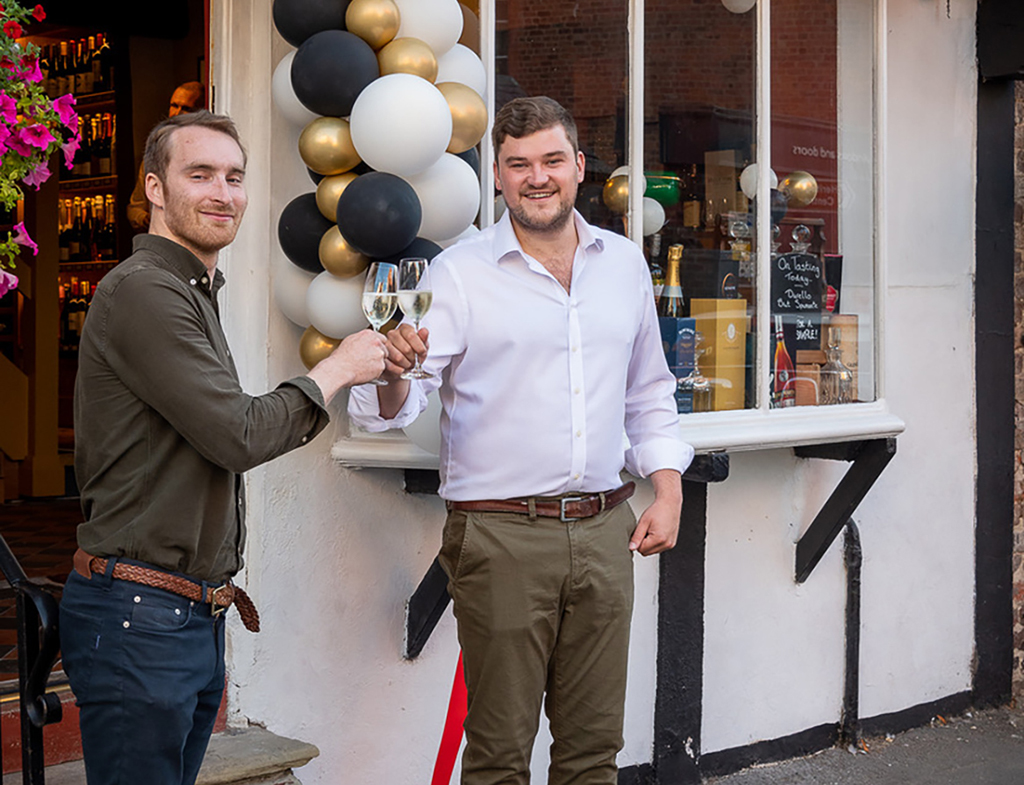
Morgan Ward and Edward Speakman went into business using a name that suggests approachability and informality – and the friendships they’ve formed in their Knutsford community bear this out.
Nigel Huddleston heads to Cheshire to say hello
Wine’s inherent versatility and sociability have made it the anchor for an increasingly wide range of events. Things have moved on from the basics – food in general, or cheese more specifically – to include tastings that pair wine in more abstract ways: colours, music, literature and the like.
Cheshire’s Morgan Edwards may have trumped the lot recently with a tasting that matched various wines with the residents of a local bird of prey centre.
“It was an interesting one,” says co-owner Morgan Ward (pictured right). “The owner comes in here for drinks every now and then and wanted to get more local people involved, rather than just bird enthusiasts who travelled from here, there and everywhere.
“It was very much the American bald eagle paired with a big Napa Cabernet, that sort of idea. Our customers who went loved it and most of them have been back there.”
Leftfield tastings are just one side of the personality of the business that Morgan co-founded with old university friend Edward Speakman, eight years ago in Knutsford.
Morgan came from a high-flying job in the City, while Edward had been working in wine for well-known auction houses. As a result, top-end fine wine – including private client business and valuations – has become a core plank of the business.
“I love the bar side of things, the events and the social side,” says Morgan, “and Ed leads the fine wine side. We complement each other really well.”
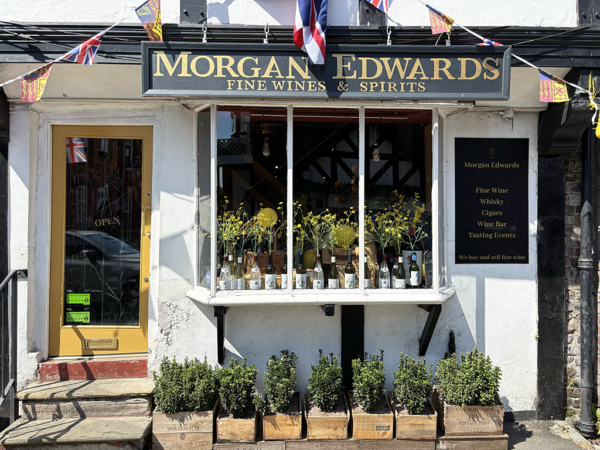
Having started out in the local indoor market hall, the business moved to its current location in 2022: a historic, compact and atmospheric building in the centre of the town, with the shop at street level, a tasting room/bar on the first floor and a garden terrace to the rear.
“We grew organically from day one, really,” says Morgan. “We had a bit of a cult following but lockdown and doing same-day deliveries put us on a wider map and eventually paid for us to get these bigger premises.
“We’re always trying to keep relevant locally and maintain the momentum, whether that means a tasting at a local bird of prey centre, or for U3A, or a charity event with the Rotary club. There’s always something going on to get involved with.”
We went to the Languedoc and came back looking for a premises with a van load of wine
How did you get started?
We were both at similar stages in our careers and wanted to start our own business, and we were always interested in wine from our university days. A friend of ours who worked in the wine trade said, if you’re serious, go to France, look at some vineyards, see what you think and put a business plan together.
We went to the Languedoc and came back looking for a premises with a van load of wine. At that point, we didn’t know what that would look like: it could have been wholesale or it could have been retail. We quickly realised there wasn’t really a decent wine shop locally and that Knutsford was the place we wanted to be.
Why was that?
I was in Sale and Ed was nearer Chester, so Knutsford was very much the middle town and we’d always meet up here. Ed was working in an auction house here as well. We knew the town well and both had family here.
It maybe gives the impression to the outside world of being a bit bigger than it actually is, perhaps because it’s got a motorway services named after it?
It’s small to medium-sized I’d say. There are quite a few housing estates further out from the centre but it’s very much a destination town. It’s peaceful and quite affluent. Tatton Park’s on our doorstep, a big National Trust property, so we get quite a few tourists at the weekend, but it’s certainly one of those towns where people know each other. There are lots of community groups and there was a lot of “shop local” going on during lockdown, which seems to have carried on, and we’ve benefited from that.
It is in this affluent area of Cheshire and people sometimes think that means the streets are paved with gold, but you really need to build up the trust of the community and be part of it. We really like it here.
How does the balance of shop and bar work?
We are predominantly a shop, but we open later on Thursday, Friday and Saturday, until 10 o’clock, and we’re normally fully booked. The bar is really important to us, as it gives us a chance to show off our wines, but we are mainly shop-focused. We do a lot of deliveries locally.
We don’t tend to focus on wholesale. We used to do a lot more when we started and we were importing a lot more ourselves, but we soon realised that the retail side was the way we wanted to go. We do a lot of private client stuff, sourcing certain vintages of Sassicaia or whatever it might be in fine wine.
Unusually, you gave your first names to the business rather than your surnames. How come?
We just thought it sounded better. Also, Edward had a great-grandfather who was called Morgan Edwards, so it just fitted nicely historically. We didn’t want to call ourselves Knutsford Wine Shop because then it’s harder to expand. We wanted a more generic, traditional-sounding name, and to back ourselves by putting our names in there, hopefully building up an element of trust.
How did the upgrade to the new premises come about?
There was a hairdresser here and a very good friend of ours knew that they were looking to leave and we were looking for our next stage, so it was all very easy and fortunate for both of us. A lot of customers say they used to have their hair done here. It’s been a commercial property for hundreds of years. It’s just a lovely building and feels really homely. When we first walked in, we just knew it was the right setting for us. We’re very traditional in the wines we stock and to be in an older building suits our MO.
We knew we wanted a split space, with either two larger rooms [at street level] or, as we have here, an upstairs and downstairs. There are so many wine shops and bottle shops that aren’t a shop any more as soon as they’ve got a drinker in there. Who wants to reach over a table to shop when someone’s sat there having a drink?
It’s got a Dickensian, Pickwick Papers sort of look.
It does. It’s 1580s, the second-oldest building in the town centre, and that gives us this really quirky space with crooked walls and beams and things. It’s beautiful in the winter, with the candles lit, just a lovely setting for a quiet drink.
We knew we wanted it to be traditional and we agreed on most of the colours ourselves but we’d never have thought of painting the staircase yellow. There’s a wonderful interiors shop locally, called Arthur Lee, who advised us, and they said the yellow would fit with the other colours and the furniture we had – and actually it sort of somehow does. We did all the work ourselves, except for the joinery and the carpet fitting, all the serious jobs. We did all the painting and sourcing [of furniture].
Is the building listed?
It is, Grade II, but that hasn’t caused us many problems. It has weirdly been extended at the back, which may have been before it was listed. The shell of the building was fine, so we haven’t structurally needed to do anything and the space naturally suits and breaks up what we do.
The only issue is a really small kitchen, which limits us on food, but we don’t really want to go down the restaurant route anyway because of all the costs associated with that. We do cheeseboards, olives, crisps, premium snacks, and we’re really busy with what we do. There are a lot of really good restaurants, so what we do complements them rather than clashing.
Looking at the shelves behind you there are empties of things like Tignanello and Pétrus, which makes it look a lot like you’re rooted in the fine wine world.
Most of those have been drunk in here, but unfortunately not by us. But one or two have! It’s important to try these things to be able to sell them. We’re quite fortunate that we’re in a fairly affluent town and there are people who really appreciate and know about wine. A lot of our customers are here to buy a gift or for a nice experience, but there is quite a large proportion who are involved in wine circles or tasting groups, who have travelled to wine regions.
The other side of that is we’re fortunate to be in the triangle of Knutsford, Alderley Edge and Wilmslow where a lot of footballers live, from Manchester United, City, Liverpool, Everton. We’ve got a lot of stock from Napa because Napa, Bordeaux, Rioja, those bigger reds, seem to be what they’re after. We’ll introduce them to different wines and they’ll tell us about things they’ve tried when they’ve been on holiday in LA or wherever. So, there’s a real fun element there as well, in that you’re never quite sure who’s going to walk in.
Do you operate at a more everyday level too?
I think £8.99 is probably our cheapest bottle at the minute. For a long time, especially when we were in the market hall, our range was probably about £7 through to £25-£30, with a few fine wines above that. That’s now flipped: we’re mostly £20 up to £50 or £60 and then a range below that as well. But we try to cover most bases. What’s very important, from £10 a bottle all the way through, is getting to know what customers like, and most of them are regular long-term customers.
Having started with the van load from the Languedoc, is that region still one you focus on?
It will always be a bit sentimental for us and we still do see the huge benefit in Languedoc wines – there’s such good value from there – but it’s less important now. We’re now doing more valuation work or finding fine wines through private sellers or different merchants. Our buying method has changed with what we sell.
Your website features your valuation service quite prominently.
With Ed’s history of valuation work, we started out with a lot of access to private clients, and that’s grown since we’ve been more active in that space. A lot of the valuation business comes through solicitors for probate and divorce matters, or just through people moving house and looking to move their wine on, or our own customers who have their own wine cellars. It sometimes gives us access to fine wines that might not be on the open market.
It might be advising them about particular auction houses, but quite often it is just giving a valuation where they’re not yet ready to sell. It’s a lot of time and travel to go all over the place to value cellars, and sometimes the money doesn’t match the time taken and expense. Having said that, the benefit is having access to the wines and it’s such a fun side of the business. We’ve seen some amazing things, some really rare wines just hidden away in the back of someone’s fairly normal garage – and you just hope it’s been stored correctly.
Is authentication an issue?
With Ed’s history in the auction houses, he’s very good at that, just from experience. We have so far been lucky and, touch
wood, not had any issues, but we do a lot of due diligence as part of that whole process.
That side of things must pit you against some pretty big longstanding players, the likes of Berry Bros.
It means you have to be very conscious of pricing and market moves. The fine wine market can move very quickly and catch you out, and you can look expensive or get left behind. It’s really about keeping on top of market data as much as margins and the like. It’s a bit more fluid.
Is ecommerce significant in all this?
We do ecommerce but the website isn’t our strong point. We built it when we first started and were quite diligent about adding new products, but we’ve become less so as we’ve become busier, so we’re actually in talks at the minute to upgrade the site and move to a different platform, and really get on top of it.
That’s our next focus for expansion. We’re really happy with the building we’re in; we could always do with more space and the bar’s always full, so we could do with more tables, but actually we see the website is what fails us at the minute. We’ve got such rare wines that when you do put them online they sell quite quickly, mostly to London but a lot to round here as well.
With all the fine wine activity going on, where do the usual UK importers fit in?
We work with most of the big boys. At any time, there are probably wines from 20–-5 suppliers on our shelves, without counting the stock from private cellars. It’s an ever-changing range but after eight years we’ve got to the level where we’re happy with most of our stock. Half the stock is from agencies and more generic and the other half is something we might only have a case or half a case of. With Bordeaux, Burgundy, Rioja and Rhône, we like to have wines that are ready to drink, rather than last year’s vintage, which you don’t necessarily get through a lot of the more mainstream suppliers, so that tends to come through our fine wine work.
Any favourites among those more regular suppliers?
Service-wise, we’ve always found Cachet and House of Townend to be really good. Cachet are very easy to work with and offer a lot of helpful advice, and keen to get involved in tastings. But to be honest, most of our suppliers are keen to get involved in tastings and really help out. It’s a good industry for that. We do quite a lot with Berkmann, Boutinot, Liberty … Top Selection have been very good for us, as a slightly smaller supplier. We deal with Jeroboams as well, who are really good to work with.
Tell us about your wine club.
We do two price points, £75 or £100, either every month, every other month or every quarter, and it’s either red, white or mixed. We set it up about four or five years ago and we probably have about 60 subscriptions locally. We were looking at the bigger companies, like Laithwaites and Naked Wines at the time, and it seemed people were bored of just getting the same things in their boxes every month. We set out to be more educational with it, so we include a producer profile, a region profile, tasting notes and what to pair it with on an A5 piece of paper for each wine. The tricky side is to find new and interesting wines at those price points after five years of doing it but we still manage to do it. We’ve only put the price up once in that time but I think we’ll probably have to do it again this year.
You said earlier that you’d moved away from wholesale. Why is that?
We really enjoyed it but you’re working on much smaller margins and dealing with a lot of other small businesses. If one or two of those go bump you’re left with quite a sizeable bill. We weren’t using a bond and we would if we were to do it again now. We were paying the tax up front and going on the road to sell it locally, a sort of wine-of-the-week-in-the-pubs model, and once you’re in, you might get a few more wines on the menu. It soon became apparent that the shop side of it was a more friendly model, less cut-throat and more social. Never say never, though. We do still keep thinking about the future and it might be the way forward if we had more staff to give us the time to find more wineries and go to tastings.
Most of our customers are regulars and we know what they like. We’ve made some great friends
What about expansion of the retail side?
It would be lovely to have 10 shops that are all successful, but there’s also a headache that comes with that. The two of us are very much part of the business. Most of our customers are regulars and we know what they like. It’s actually really good fun and we’ve made some great friends over the years, many of whom were at Ed’s wedding recently. It’s very much a community business. If we had two or three shops we couldn’t be in them all at the same time.
Tell us more about the events you’re involved in.
We do our own Grand Wine Fair once a year. It’s essentially a trade fair for the public. We do it in a local church and have about 300 wines open for 300 people. It always raises some good orders on the night. All our suppliers support it and we build on it every year.
We’ve done a few classic car events, where we’re just there as a bar or a shop front, but also lots of corporate or private events. There are quite a few prestigious car dealerships nearby who we’ve worked with. We did one with Aiden Byrne, the celebrity chef who owns Li-ly down the road. He did the canapés and we did the wine, and the Collect art gallery brought a Banksy along. We do get very interesting events coming our way. It’s very hard to say no because it helps with PR and keeps the momentum going. But it goes from that to charity events where you’ve got a gazebo in a field on a Sunday afternoon. We do all sorts of things.
Do you have your own events in the shop?
We do our own at least once a fortnight, either upstairs or in the garden. We’ll pick a region and dive into it and that can include fine wine nights or generic nights, such as the wines of Greece, or really specialist ones around something like Loire Valley Sauvignon. This evening we have the local ghost-hunter tour coming in at 6 o’clock. They get all their gadgets and gizmos out to see what they can find, but we’ve never had anything.
Will there be a return visit to the birds of prey centre?
They’ve got other events coming up soon that we’re going to be involved with. There’s a vulture festival coming up. There are many fun sides to this job. You never know what’s going to happen.